

The work towards the development of the successor of Java 13 has already begun. With two officially proposed features and another in the way, Java Development Kit (JDK) 14 is coming to light. Along with switch expressions in JDK 14, JDK Enhancement Proposal would develop Java’s mapped byte buffers for supporting non-volatile memory. The production release of JDK 14 is scheduled for 17th March 2020. Yet the third feature, switch expressions, has to be proposed officially.
What is Java?
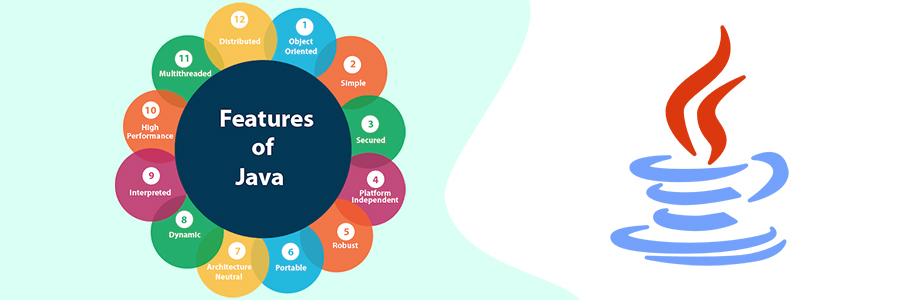
Java is an object-oriented language which is similar to C++ but with more simplified and advanced features. It can be accessed freely and could be run on any platform. Since it is concurrent, you can execute many statements at a time instead of serially performing them. This independent programming language follows the logic of ‘Write Once, Run Anywhere’, which signifies that the code can be executed on any platform that supports Java. In other words, it provides a computing platform to develop applications.
By removing complexities such as operator overloading and pointers that could be noticed in C++, Java has made our lives simpler. Its platform independence feature makes it easier to transfer an application written on one platform to another platform. With a robust memory management system, it eliminates errors that are detected during runtime and compilation. After compilation, all the code is converted into bytecode, which is not readable by human beings and, in turn, helps ensure data security against access from untrusted sources.
What is Java Used For?
From as early as the 2000s, Java has remained highly popular and has been dominating this field until the present. The reason behind its popularity can be understood by going through the opportunities it provides in various domains, some of which are listed below:
- In the banking sector, it is used for managing transactions.
- In retail, it is used for billing applications in restaurants and stores. Billing systems can be developed using Java.
- It is used to develop programs designed to reduce implementation dependencies.
- In Android, applications can be written in Java or use Java APIs.
- It facilitates the management of financial services and is used in server-side applications.
- In the stock market, Java is used to write algorithms that help determine which companies to invest in.
- In the scientific and research community, it helps process massive amounts of data.
Components in Java
1. Java Development Kit (JDK)
This tool is necessary to package, compile, and document Java programs. JRE is included in the JDK, which consists of tools for Java programmers and is available without any extra cost for supported distributions. It also consists of a compiler, an interpreter, documentation tools, an archiver, and other essential tools required in Java development services.
2. Java Runtime Environment (JRE)
In this environment, Java bytecode can be executed. It includes a JVM implementation, class libraries, and other files required by the JVM at runtime. The JRE software package contains the components needed to run a Java program.
3. Java Virtual Machine (JVM)
This abstract machine is a specification that establishes a runtime environment for the execution of Java bytecode. It usually involves three concepts:
- Implementation: A program that meets the requirements of the JVM specification.
- Specification: A document that describes how a Java virtual machine should behave. Implementations may be provided by various companies.
- Runtime Instance: Whenever you execute a Java command on the command prompt, a JVM instance is started to run the program.
Features present in the earlier versions of Java (JDK 12 and JDK 13)
Here are some of the features of previous versions to help you compare them with the latest version.
One of the most prominent new features in JDK 12 is the switch expression, which was also the first language change. At the beginning of 2018, the idea of preview language features was proposed under JEP 12. If a feature is not well received, it is possible to modify it or remove it altogether.
Another useful feature in JDK 12 is the introduction of new libraries. The collector utility class provides a new collector for the Stream API. This unique collector can be acquired using the teeing method. Usually, the teeing collector accepts three arguments: a BiFunction and two collectors. Values from the input are passed to each collector. To evaluate and generate the final result, the result produced by each collector is passed to the BiFunction as an argument.
JDK 12 provides a range of APIs and features, such as switch expressions, which are useful for developers. G1 garbage collector users can also benefit from performance improvements.
In JDK 13, the text block feature was introduced. It is a multiline string that avoids the need for most escape sequences. It automatically formats the string while giving developers control over its presentation. Several reasons motivated the introduction of text blocks in Java. One of them was to simplify Java programming by allowing multiple lines of source code to be expressed naturally without requiring numerous escape sequences.
In JDK 13, the switch expression feature was modified to allow it to yield a value using the yield statement. The enhanced switch construct can be used either as an expression or as a statement. These changes were intended to simplify coding and help prepare the language for future enhancements, including pattern matching.
The Newly Introduced Features of Java 14
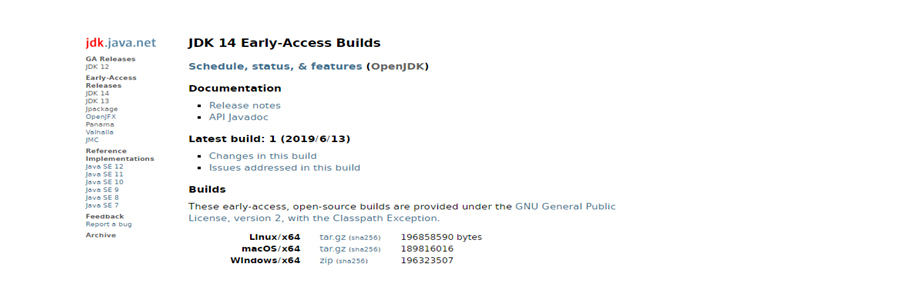
Features that were lacking in previous versions of Java are implemented in the new version, i.e., Java 14. Mentioned below are three features that were expected to be introduced with Java 14. Developers were still working on the development of features in Java 14 at the time.
1. Helpful NullPointerExceptions
The NullPointerExceptions feature is designed to improve the exceptions produced by the JVM by identifying a specific variable that is null. The authors who proposed this feature aim to help support staff diagnose unexpected program termination and improve understanding of program behaviour by associating static program code with dynamic exceptions. One of its primary goals is to reduce the uncertainty and confusion developers may experience when debugging errors.
2. Non-Volatile Mapped Byte Buffers
Non-volatile mapped byte buffers introduce a JDK file mapping mode that allows the FileChannel API to create MappedByteBuffer instances that refer to NVM, or non-volatile memory. This feature enables programmers to update and build applications without incurring the translation and copying costs usually associated with input and output operations.
The main goals of this JDK Enhancement Proposal are:
- To ensure that clients can efficiently update and access NVM from Java programs.
- To implement this behaviour using JDK-internal APIs described in the Unsafe class, allowing the functionality to be used by other classes beyond MappedByteBuffer.
- To provide APIs that can track buffers mapped over NVM for management and monitoring purposes.
3. Switch Expressions
By extending the switch construct, switch expressions simplify coding by allowing switch to be used either as an expression or as a statement. In JDK 14, switch expressions became a permanent language feature after being previewed in JDK 12 and JDK 13.
This feature also lays the groundwork for using pattern matching in switch statements and expressions, which can enable developers to extract components from objects safely and concisely in certain circumstances.